
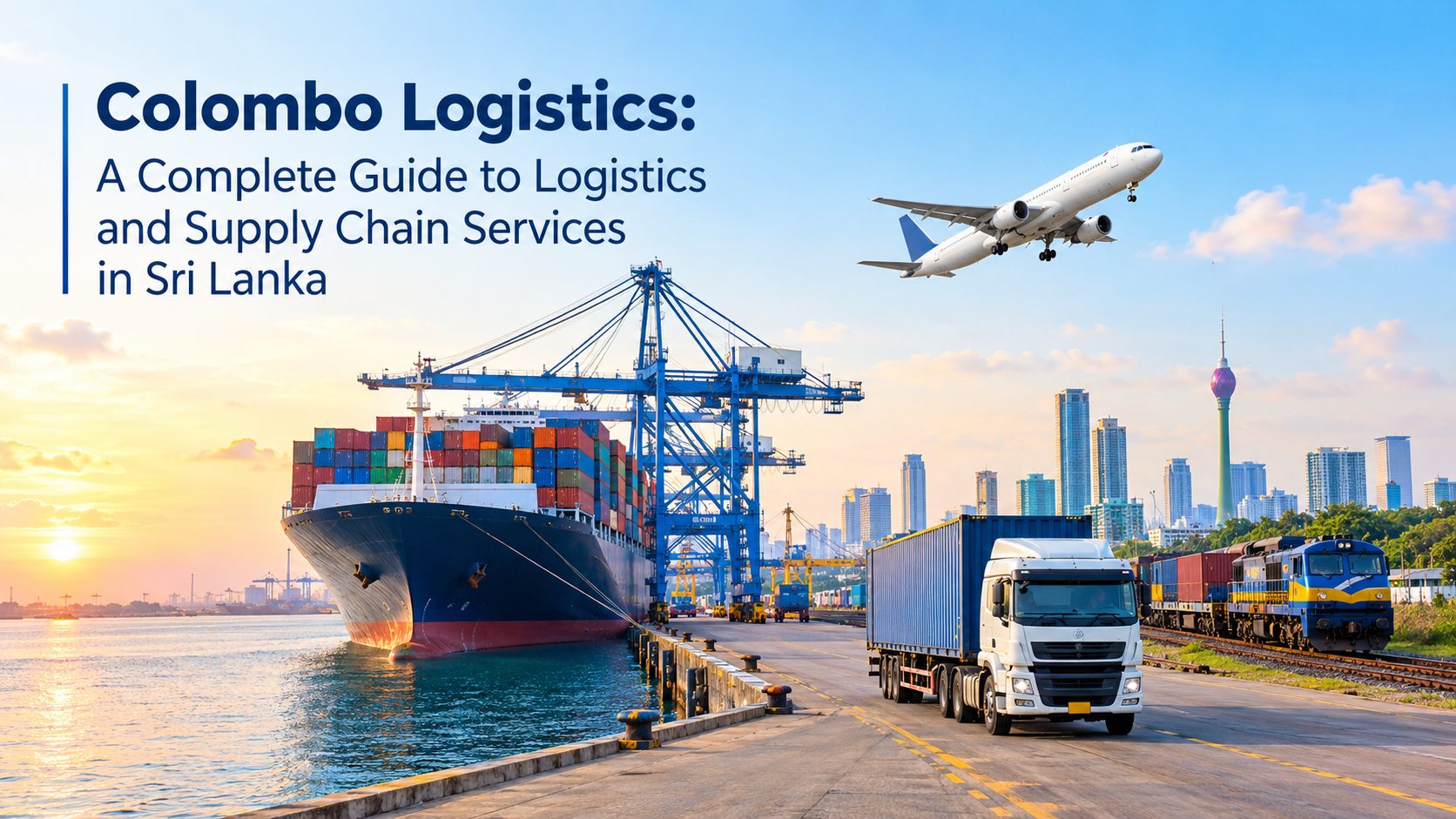
Quick answer: Colombo logistics covers everything needed to move goods in and out of Sri Lanka’s commercial capital: freight forwarding by sea, air, road and rail, multimodal transport, transshipment handling and customs clearance. Because the Port of Colombo is South Asia’s leading container hub, the city is a natural gateway for importers, exporters and manufacturers. The right logistics partner coordinates these services so cargo moves smoothly from origin to final delivery.
Whether you are shipping garments abroad, importing machinery or distributing goods across the island, understanding how Colombo’s logistics network works helps you save time and avoid costly delays. This guide from Fletching Logistics explains the key services, the step-by-step process and the questions businesses ask most often.
Colombo’s strength comes from its location on one of the world’s busiest east-west shipping routes. The Port of Colombo handled a record 8.29 million TEUs in 2025, up from 7.79 million TEUs in 2024, and transshipment accounts for close to four-fifths of its container throughput. Deepwater terminals such as Colombo International Container Terminals (CICT) can serve ultra-large container vessels, and new capacity has come online with the Colombo West International Terminal.
For businesses, this means more shipping lines, more route options and stronger connections to global markets. Bandaranaike International Airport adds air cargo access for time-sensitive shipments.
Sea freight is the backbone of Sri Lanka’s trade. It suits large, heavy or non-urgent cargo, and you can ship as a full container load (FCL) or a less than container load (LCL) shared with other cargo.
Air freight is the fastest way to move urgent, high-value or perishable goods internationally. It costs more per kilogram, so it is best kept for cargo where speed protects its value.
Road transport connects factories, warehouses, ports and customers. A strong Colombo logistics network relies on road freight for port transfers, island-wide distribution and final-mile delivery, with monitoring and documentation support along the way.
Rail freight can move bulk cargo over longer inland distances. It is often paired with road transport at either end of the journey.
Multimodal transport combines several modes under one plan, such as truck to port, sea to destination and truck to the consignee. One coordinated plan reduces handover gaps between providers.
Customs brokerage covers the declarations, documents and clearance steps needed to release cargo legally. Sri Lanka Customs uses ASYCUDA World, an electronic platform for customs declarations, so accurate data entry matters.
Cargo moving between vessels at Colombo needs careful coordination so it connects to the next leg without delay.
Prepare a clear description of the goods, quantity, packaging, weight, dimensions and HS code. Note any special needs such as temperature control, fragile handling or dangerous goods status.
Match the mode to your deadline, budget and cargo type. Choose sea for large volumes, air for urgency, and road or rail for inland legs. A forwarder can advise when a combination makes more sense.
Agree on the Incoterm with your buyer or supplier so everyone knows who arranges and pays for each stage, from pickup to final delivery.
Some products need an import licence, health approval or other permit before they can be cleared. Check these requirements before the goods ship, not after they arrive.
A commercial import typically needs a customs declaration, commercial invoice, packing list and transport document (a bill of lading or air waybill). A certificate of origin may also be needed to claim preferential duty under a trade agreement. Ensure product descriptions, weights and values match across all documents.
Confirm the booking, cut-off dates and the pickup or delivery schedule. Plan road transport to and from the port or airport early, since a missed cut-off can cost days.
Your Customs House Agent submits the declaration, the cargo goes through the customs selectivity process, and duties and taxes are paid before release.
Monitor the shipment until it reaches the consignee, then keep the delivery confirmation and billing records on file.
Look for a provider that can show:
Fletching Logistics (Pvt) Ltd builds on the heritage of St. Anthony’s Group, which dates back to 1942, and serves clients locally and globally from its Colombo 10 office.
A logistics company plans and coordinates the movement of goods. This includes booking space with carriers, arranging pickup and delivery, preparing documents, handling customs clearance and giving you updates on shipment status.
Clearance time depends on the cargo type, document accuracy, whether the shipment is selected for inspection and whether duties are paid promptly. Complete and consistent paperwork is the best way to prevent delays.
Commercial imports usually need a customs declaration filed through ASYCUDA, a commercial invoice, a packing list and a bill of lading or air waybill. Some goods need extra permits, and a certificate of origin may help you claim preferential duty.
A freight forwarder arranges the movement of cargo between locations. A customs broker prepares and submits the paperwork needed to clear goods through customs. Many logistics companies provide both services.
Transshipment means moving cargo from one vessel to another at an intermediate port. Colombo is a major transshipment hub, which gives shippers more connections to regional and global destinations.
It depends on the cargo. Sea freight suits bulk volumes, air freight suits urgent goods, and road or rail connect inland locations. Many shipments combine more than one mode.
Yes. A provider with freight forwarding, inland transport and customs services can manage the full journey and give you a single point of contact.
Contact them as soon as an order is confirmed. Early planning leaves time to check permits, choose the best route and secure space with carriers.
Share your cargo description, weight, dimensions, origin, destination, ready date, required delivery date and any special handling needs.
Yes. Fletching Logistics offers road freight with shipment assessment, transport coordination, documentation support and delivery to the final destination.
Choosing the right partner makes every stage of your supply chain easier to manage. To discuss your cargo, route and timeline, reach out to Fletching Logistics for Colombo logistics services tailored to your business.