

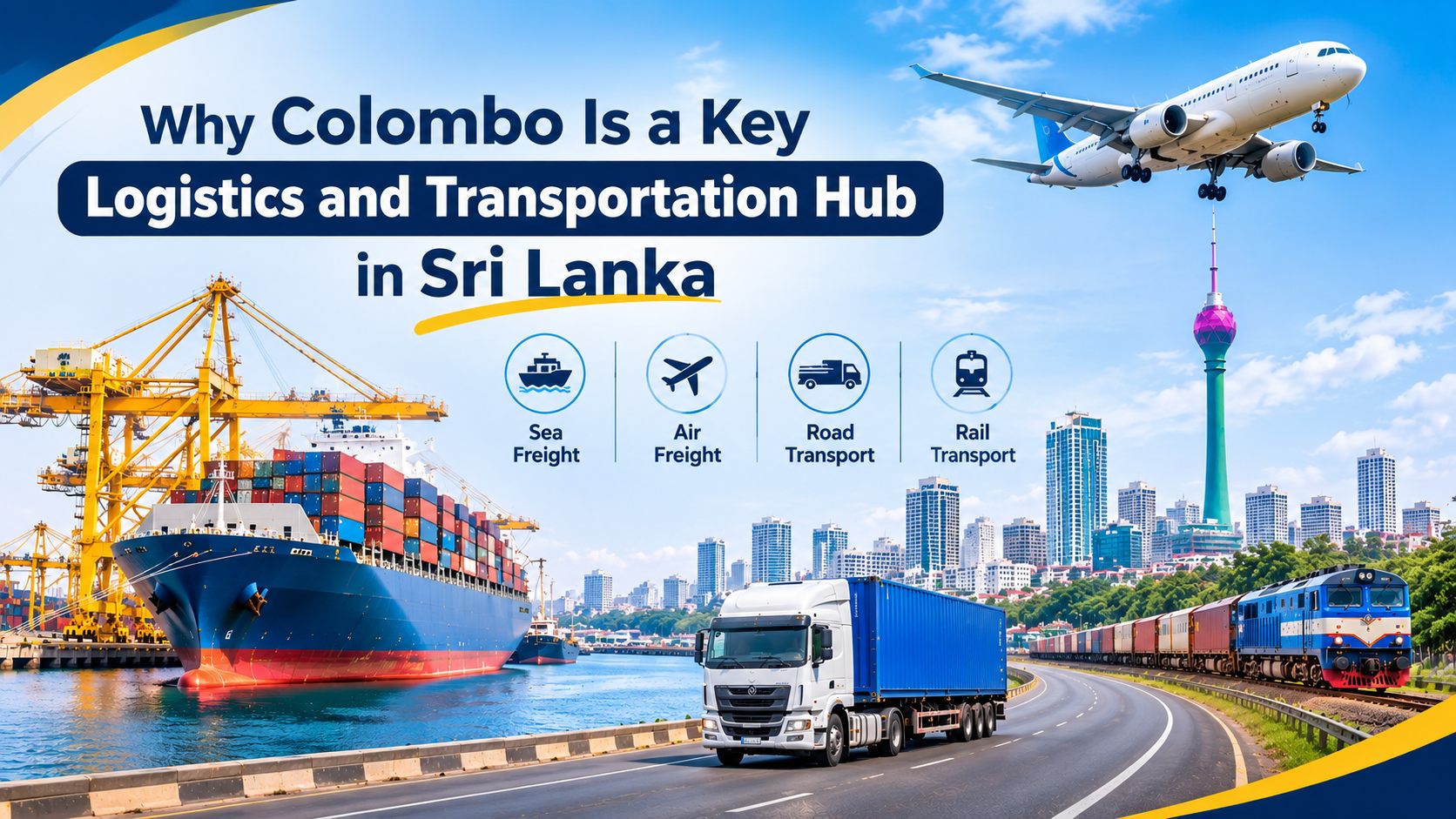
Quick answer: Colombo is Sri Lanka’s key logistics and transportation hub because it combines four advantages in one place: a deepwater port on the main east-west shipping route, an international airport within expressway reach, a road and rail network that links the city to the rest of the island, and the country’s largest concentration of businesses, customs services and logistics providers. Together, these strengths make Colombo logistics a practical gateway for importers, exporters and manufacturers.
If you are deciding where and how to move cargo, understanding why Colombo works so well helps you plan smarter routes and choose the right services. This guide from Fletching Logistics explains the main reasons, how cargo flows through the city, and what businesses should watch for.
Colombo sits on the southwestern coast of Sri Lanka, close to the main shipping lane that links Europe and the Middle East with East Asia. Ships can call at Colombo with only a short diversion, which is why many carriers use it to connect cargo across the Indian Ocean.
Colombo International Container Terminals (CICT) has a 1,200-metre quay and 18 metres of water depth, which allows it to handle vessels of more than 22,000 TEU. The newer Colombo West International Terminal can accommodate the largest container ships with a 20-metre draft. Deep berths matter because shipping lines keep deploying bigger vessels.
The Port of Colombo handled a record 8.29 million TEUs in 2025, up from 7.79 million TEUs in 2024. Transshipment, where cargo moves from one vessel to another, makes up close to four-fifths of container volume. That steady flow of ships and feeder services gives shippers more sailing options.
Sri Lanka’s main international airport is at Katunayake, about 35 kilometres north of Colombo. The 25.8-kilometre Colombo-Katunayake Expressway links the two, which helps urgent and high-value air cargo reach the city quickly.
Expressways such as the Southern Expressway, along with national highways and the rail network, connect Colombo to factories, warehouses and markets. Road transport is the main way cargo moves between the port, airport and customers, and Fletching Logistics offers Colombo logistics support through its road freight forwarding service.
The Western Province, home to Colombo, accounted for 42.4% of Sri Lanka’s nominal GDP in 2024. Manufacturers, traders, banks, shipping agents and customs professionals cluster here, so there is a deeper pool of services close to the port.
Sri Lanka Customs uses ASYCUDA World for electronic declarations. Cargo clearance, documentation and logistics support are concentrated around Colombo, which can shorten the distance between your cargo and the people handling it.
Exporters send goods from factories or warehouses to the port or airport, usually by road. Importers receive cargo that arrives by sea or air.
A typical shipment needs a commercial invoice, packing list and transport document, such as a bill of lading or air waybill. Customs declarations are submitted electronically.
A customs broker submits the declaration, the shipment is assessed, duties and taxes are paid, and the cargo is released. Accurate documents keep this step moving.
Export cargo is loaded onto a vessel or aircraft. Transshipment cargo may be transferred between ships at Colombo and continue to another port.
After arrival and clearance, trucks or rail services take the cargo to the warehouse, factory or customer.
Colombo’s role comes with pressures. Industry groups have raised concerns about repeated vessel omissions, where ships skip a scheduled call, and about port efficiency. Large inbound volumes can also add traffic around the port. Practical steps include booking early, building buffer time into your schedule and keeping your documents complete.
Fletching Logistics (Pvt) Ltd, based in Colombo 10, builds on the heritage of St. Anthony’s Group, which dates back to 1942.
Colombo combines a deepwater transshipment port, nearby air cargo access, road and rail links, and a concentration of trade services. This makes it the main gateway for Sri Lanka’s cargo.
Yes. Transshipment represents close to four-fifths of the port’s container throughput, and Colombo is regarded as South Asia’s leading container hub.
Bandaranaike International Airport at Katunayake is about 35 kilometres north of Colombo, connected by a 25.8-kilometre expressway.
Road transport is the most common choice because it can reach factories, warehouses and delivery points directly. Rail can suit bulk cargo on suitable routes.
Most commercial shipments need a customs declaration, commercial invoice, packing list and bill of lading or air waybill. Some products also need permits or a certificate of origin.
Yes. A provider that offers freight forwarding, inland transport and customs services can manage the journey from pickup to delivery.
Start as soon as the order is confirmed. This leaves time to check permits, secure space and arrange inland transport.
Yes. Options such as less than container load (LCL) shipping, air freight and road transport let smaller shippers use the same gateway as larger companies.
Yes. Fletching Logistics offers road freight forwarding covering shipment assessment, transport coordination, documentation support and delivery.
Provide the cargo description, weight, dimensions, origin, destination, ready date, delivery deadline and any special handling needs.
Colombo gives businesses a strong base for moving goods, but results depend on how well each step is planned. To discuss your cargo and timeline, contact Fletching Logistics for a dependable Colombo logistics partner for your next shipment.