

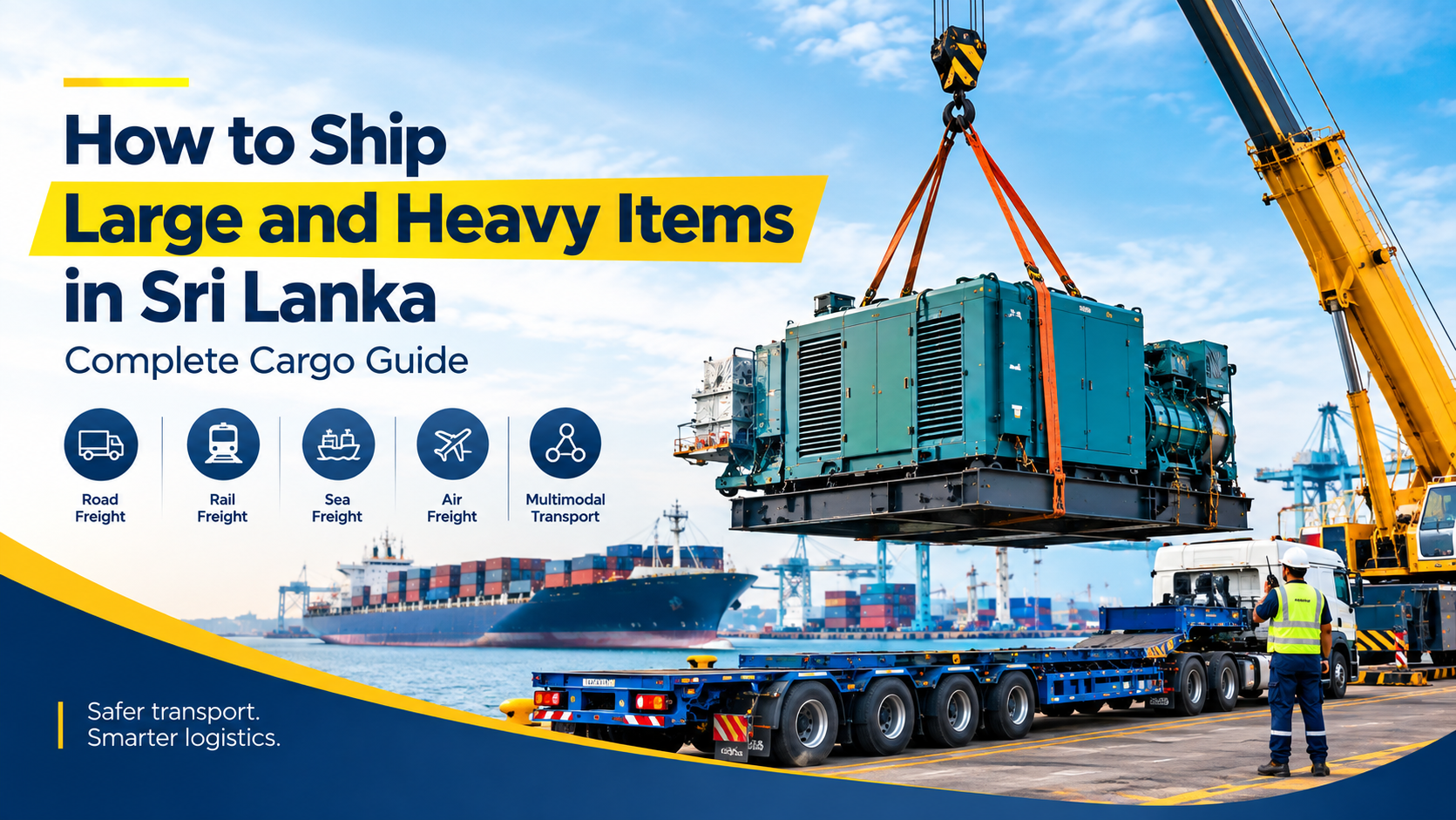
Moving industrial machinery, construction equipment, generators, vehicles, or bulk goods is very different from sending a regular parcel. Large and heavy cargo needs the right vehicles, lifting equipment, packaging, documentation, and sometimes special permits. A small planning mistake can lead to damage, delays, or unexpected costs. In this complete guide, Fletching Logistics explains how to ship large and heavy items within Sri Lanka and overseas, safely and efficiently.
To learn how to ship large and heavy items, start by recording the exact weight and dimensions of your cargo. Then choose the right transport mode (road, rail, sea, air, or multimodal), arrange suitable lifting equipment and packaging, obtain any required permits for oversized loads, prepare shipping and customs documents, insure the cargo, and track it until delivery. Working with an experienced logistics provider makes the entire process safer and more cost-effective.
Large and heavy cargo generally includes items that cannot be handled as standard parcels or loose cartons, such as:
Road transport is the most flexible option for moving heavy items across Sri Lanka, including factory-to-port and port-to-site deliveries. Depending on the cargo, trucks, flatbed trailers, or low-bed trailers may be used. Professional road freight forwarding services plan safe routes, secure loads correctly, and provide door-to-door delivery.
For bulk cargo travelling long inland distances, rail can reduce transport costs and road congestion. A rail freight transport service is a practical option for heavy commercial loads that do not require urgent delivery.
When shipping heavy items internationally, sea freight is usually the most economical choice. Cargo can move in standard containers, flat rack or open-top containers for oversized items, or as breakbulk cargo when it will not fit inside a container. A reliable sea freight forwarding service helps you choose between Full Container Load (FCL), Less than Container Load (LCL), and specialised equipment.
Air freight is not only for small parcels. Urgent heavy items such as critical spare parts or high-value equipment can be flown using palletised cargo, freighter aircraft, or charter services. An experienced air freight forwarding service coordinates airline capacity, weight limits, and handling requirements.
Heavy cargo often needs more than one transport mode. A multimodal transport service combines road, rail, sea, and air under one coordinated plan, reducing handovers and improving visibility.
Record the exact length, width, height, and gross weight, including packaging. Also note the centre of gravity and lifting points for machinery. Accurate details help your logistics partner select the right vehicle and equipment.
Check whether the item is fragile, contains fuel or batteries, or is classed as hazardous. Equipment such as generators and vehicles may need fuel drained or batteries disconnected before shipping.
Select road, rail, sea, air, or multimodal transport based on distance, deadline, budget, and cargo size.
Oversized or overweight loads may require approvals from the relevant authorities, restricted travel times, or police escort. Route planning should consider bridge limits, narrow roads, overhead cables, and access at the pickup and delivery sites.
Heavy items often need forklifts, cranes, or hydraulic lifting equipment. Confirm that trained operators and suitable equipment are available at both ends of the journey.
Use wooden crates, skids, or pallets as needed. Protect sensitive parts with shock-absorbing materials and moisture barriers, particularly for sea shipments. Secure cargo inside vehicles or containers with lashing, chains, and blocking to prevent movement.
Common documents include a commercial invoice, packing list, Bill of Lading or Air Waybill for international shipments, customs declarations, and any permits or certificates required for the goods.
For imports and exports, accurate customs declarations are essential. Using an experienced customs clearing agent in Sri Lanka helps avoid delays, penalties, and incorrect duty payments, especially for machinery and equipment with specific classifications.
Heavy and high-value cargo should be covered by cargo insurance to protect against damage or loss during handling and transit.
Monitor your shipment throughout its journey. With Fletching Logistics, you can track your shipment using your booking, HBL, HAWB, or container number, and plan unloading in advance.
Costs depend on weight and dimensions, distance, transport mode, vehicle or container type, lifting equipment, permits and escorts, packaging and crating, insurance, customs duties, and delivery urgency. Oversized cargo that needs special equipment or route planning usually costs more than standard freight.
Book early, as specialised trailers, containers, and lifting equipment have limited availability. Share accurate cargo details upfront to avoid last-minute changes. Photograph items before loading to document their condition. Check site access for trucks and cranes, and make sure your team is ready for unloading at the destination.
The price depends on the machinery's weight and size, distance, vehicle type, lifting requirements, and any permits needed. A site or cargo assessment gives the most accurate quote.
Most heavy machinery is shipped by sea using flat rack, open-top, or breakbulk options. The process includes crating, export customs clearance, port handling, and destination clearance.
Yes. Palletised cargo, freighter aircraft, and charter services can carry large items, though air freight costs more than sea freight.
Loads that exceed standard size or weight limits may require approvals from the relevant authorities and planned travel times. Your logistics provider can advise on requirements for your route.
LCL works well for smaller heavy shipments that do not fill a container. For very heavy or bulky loads, FCL or specialised containers are often safer and more cost-effective.
What is the best way to ship large and heavy items? It depends on distance and urgency. Road freight suits local delivery, sea freight suits international shipments, and multimodal transport suits complex routes.
What documents are required to ship heavy cargo? Typically a commercial invoice, packing list, Bill of Lading or Air Waybill, customs declarations, and any required permits.
How should heavy machinery be packed for shipping? Use sturdy crates or skids, protect sensitive components, apply moisture protection, and secure the item with proper lashing.
Do I need insurance for heavy cargo? Cargo insurance is strongly recommended for heavy, valuable, or oversized items.
Can Fletching Logistics handle both transport and customs clearance? Yes. Fletching Logistics provides end-to-end solutions, including transportation across air, sea, road, and rail, along with customs brokerage.
Built on the heritage of St. Anthony's Group since 1942, Fletching Logistics is a trusted shipping and logistics company in Sri Lanka. We deliver end-to-end cargo solutions across air, sea, road, and rail for businesses of all sizes. Our experienced team manages route planning, documentation, customs compliance, and shipment tracking, with tailored solutions designed around your cargo and deadlines.
Shipping large and heavy items does not have to be stressful. With the right planning and an experienced partner, your cargo can arrive safely and on time. Contact Fletching Logistics today for a customised cargo transport quote.