

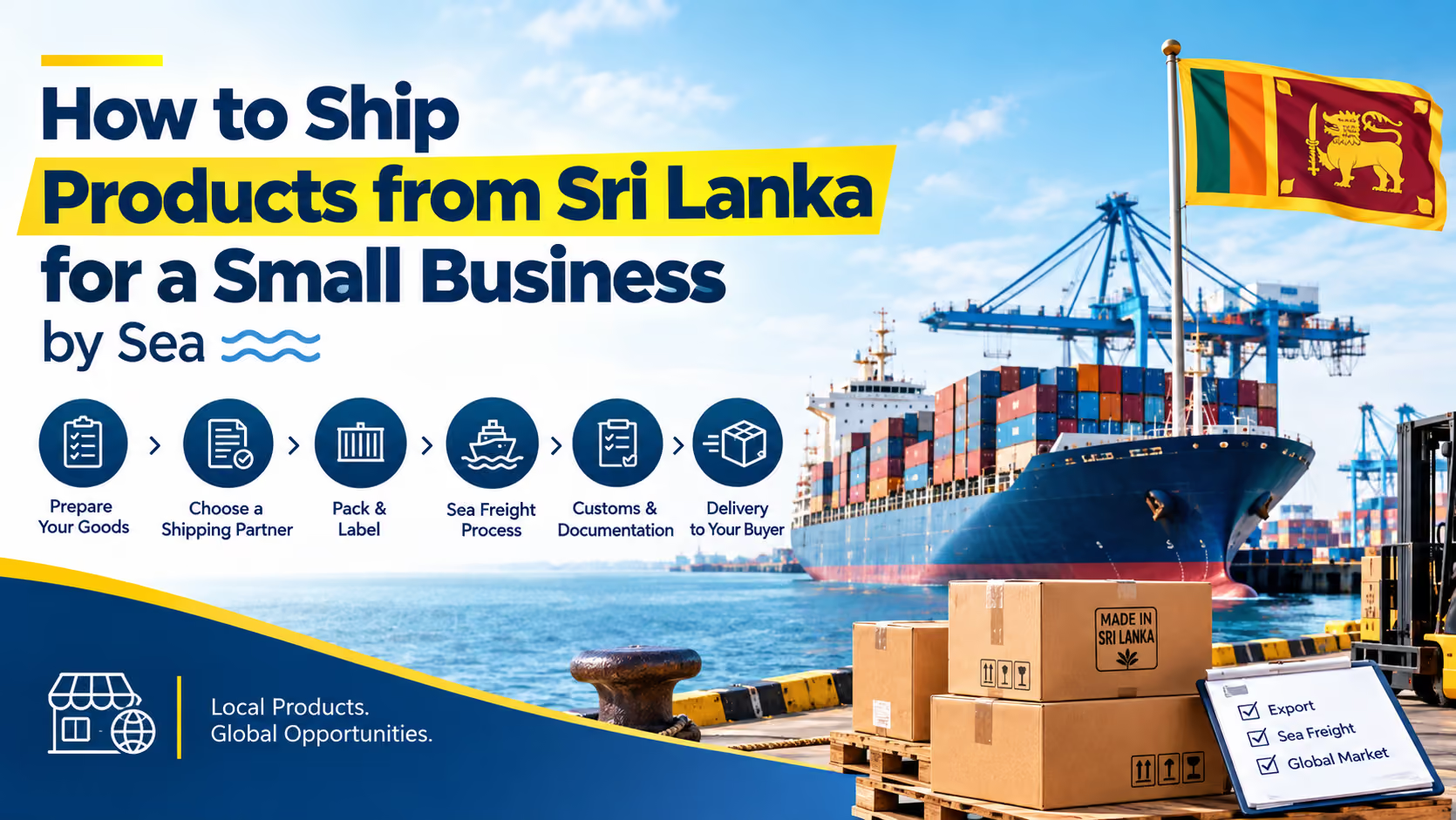
Sri Lankan small businesses are reaching global customers with products like Ceylon tea, spices, coconut products, garments, handicrafts, and natural cosmetics. But once you land an overseas order, one big question follows: how do you actually get your goods there? For most small exporters, sea freight is the most affordable answer. In this guide, Fletching Logistics explains how to ship products from Sri Lanka by sea, step by step, even if you are exporting for the first time.
To understand how to ship products from Sri Lanka by sea, follow these basics: register your business for export, agree on shipping terms with your buyer, check the destination country's import rules, pack goods for ocean transport, measure the shipment volume in CBM, choose LCL or FCL, book with a freight forwarder, prepare export documents, clear Sri Lanka Customs, and track the vessel until your goods are delivered.
Sea freight offers the lowest shipping cost per unit, making it ideal for small businesses with tight margins. You do not need to fill a whole container, since Less than Container Load (LCL) lets you pay only for the space you use. Sea shipping also handles heavy and bulky goods easily and supports steady, repeat export orders. The main trade-off is time, as international sea shipping can take anywhere from 2 to 6 weeks or more, depending on the route. A professional sea freight forwarding service helps you balance cost and transit time.
Most small businesses start with LCL and move to FCL as order volumes grow.
Make sure your business is legally registered and has the tax and customs registrations needed to export. Organisations such as the Sri Lanka Export Development Board (EDB) also offer guidance and support programmes for new exporters.
Before shipping, agree on price, payment method, and Incoterms. Terms like EXW, FOB, CIF, or DDP define who pays for transport, insurance, and duties, and where responsibility transfers from you to the buyer. For beginners, FOB is a common choice because your responsibility ends once goods are loaded at the Sri Lankan port.
Confirm the import rules in your buyer's country. Food, tea, spices, cosmetics, and plant-based products often need labelling compliance, health certificates, or phytosanitary certificates.
Sea cargo faces humidity, stacking pressure, and multiple handling points. Use strong export cartons, stack goods on pallets, wrap them securely, and add moisture protection such as desiccants, especially for tea, spices, and textiles. Label every carton clearly with shipping marks.
Sea freight is usually priced by volume in cubic metres (CBM). Multiply length × width × height of each carton in metres, then multiply by the number of cartons. Accurate figures help you get correct quotes and avoid surprise charges.
Share your product type, volume, weight, pickup location, and destination with your freight forwarder. They will compare carriers, sailing schedules, and rates, then book space on a vessel.
Common documents include:
Your products must reach the container freight station or port in Colombo. Road freight forwarding services can collect goods from your workshop, factory, or warehouse and deliver them safely.
Goods must be cleared before they are loaded onto the vessel. Working with an experienced customs clearing agent in Sri Lanka helps ensure accurate declarations, correct HS codes, and smooth clearance.
After the vessel sails, monitor its progress and share updates with your buyer. With Fletching Logistics, you can track your shipment using your booking, HBL, or container number. At the destination, the goods are cleared through import customs and delivered port-to-port or door-to-door, depending on your agreement.
Sea freight costs depend on shipment volume (CBM), weight, LCL or FCL choice, destination port, carrier, fuel surcharges, seasonal demand, packaging, insurance, and local port and handling charges. Choosing the right Incoterms also affects which costs you pay.
Pack cartons efficiently to reduce CBM, since wasted space costs money. Plan shipments early to secure better rates and avoid peak-season surcharges. Combine multiple small orders into one consolidated shipment where possible. Keep documents accurate to avoid demurrage and storage fees caused by customs delays. Consider marine insurance to protect your goods during the ocean journey.
Many first-time exporters underestimate transit time, declare incorrect product descriptions or values, use weak packaging, forget certificates for food or plant products, or skip agreeing on Incoterms. Each of these can lead to delays, extra costs, or unhappy buyers.
It usually takes 2 to 6 weeks or more, depending on the destination, sailing frequency, transshipment ports, and customs clearance.
With LCL shipping, there is often no need to fill a container, so small businesses can ship smaller volumes. Minimum chargeable volumes can apply, so ask your forwarder for details.
Yes. Sea freight is significantly more cost-effective per unit, especially for heavy or bulky goods, though transit is slower.
LCL rates are mainly calculated per CBM, with the weight also considered, plus handling, documentation, and port charges.
Yes. Tea and spices are common sea exports, but they may need specific certificates, correct labelling, and moisture-proof packaging.
Do I need a freight forwarder as a small business? It is highly recommended. A freight forwarder handles carrier booking, consolidation, documentation, customs coordination, and tracking, which saves time and reduces costly mistakes.
What documents are needed to export products by sea from Sri Lanka? Typically a commercial invoice, packing list, Bill of Lading, customs export declaration, certificate of origin, and any product-specific certificates.
What is the difference between FCL and LCL? FCL uses an entire container for your cargo, while LCL shares container space with other shipments, making it cost-effective for smaller volumes.
Is my cargo safe during sea shipping? Yes. Sea freight follows international maritime and container safety regulations, and optional marine insurance adds extra protection.
Can Fletching Logistics offer door-to-door sea shipping? Yes. Fletching Logistics offers both port-to-port and door-to-door sea freight shipping.
Built on the heritage of St. Anthony's Group since 1942, Fletching Logistics supports businesses of all sizes with dependable shipping and logistics solutions from Sri Lanka. Our team handles booking, consolidation, documentation, customs coordination, insurance, and tracking, backed by strong global carrier partnerships. With tailored sea freight plans, competitive pricing, and 24/7 customer support, we make international shipping simple for growing businesses.
Your products deserve a global market, and sea freight makes it affordable. Contact Fletching Logistics today for a customised sea freight quote and expert guidance for your first or next export shipment.