

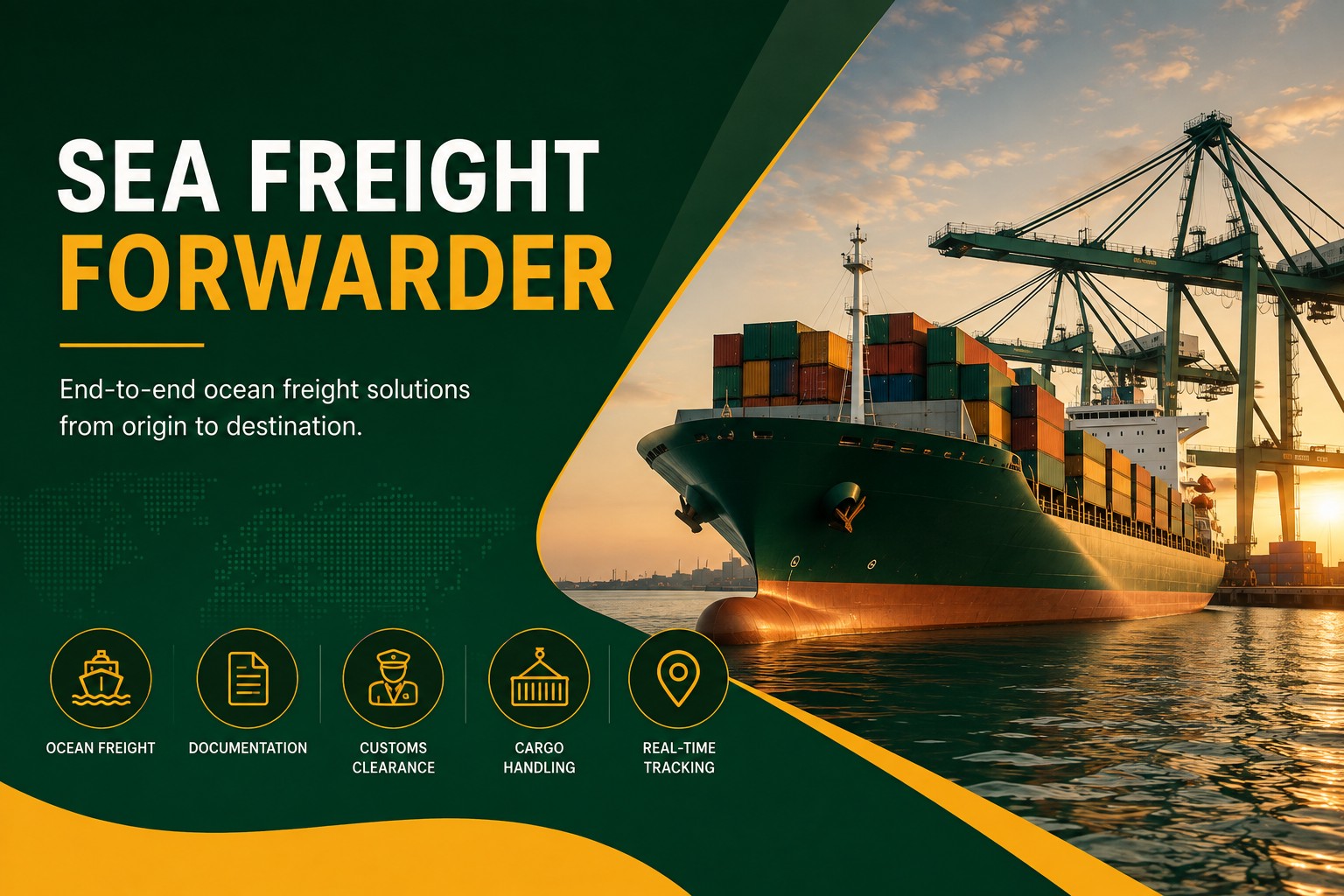
When businesses import or export goods internationally, moving cargo from one country to another involves much more than placing a container on a ship. Documentation, carrier bookings, customs procedures, cargo handling, port operations, inland transportation and delivery all need to be coordinated correctly.
A sea freight forwarder acts as a logistics coordinator between the shipper and the different parties involved in transporting cargo by sea. The forwarder helps businesses plan shipments, arrange transportation, manage documentation, coordinate customs procedures and track cargo until it reaches its destination.
For importers and exporters, working with an experienced sea freight forwarder can make international shipping easier to manage and reduce the risk of avoidable delays.
A sea freight forwarder is a company or logistics professional that arranges and coordinates the movement of cargo by ocean.
The forwarder typically works with shipping lines, ports, customs authorities, warehouses, transport providers and other logistics partners to move goods from the origin point to the destination.
A freight forwarder does not necessarily own the vessel transporting the cargo. Instead, it coordinates the services required to complete the shipment.
For businesses looking for professional ocean freight coordination, a Sea Freight Forwarding Service can help manage the different stages of an international shipment through one logistics partner.
The exact responsibilities can vary depending on the shipment, destination and service agreement. However, the main responsibilities usually include the following.
The process starts by understanding the customer's cargo requirements.
A forwarder may need information such as:
Based on this information, the forwarder can help determine a suitable shipping method.
One of the most important responsibilities is arranging transportation with a suitable shipping line or carrier.
The forwarder can help identify available sailing schedules, routes, container options and transit arrangements based on the shipment requirements.
The objective is to find a practical balance between cost, transit time, reliability and routing.
International sea freight involves several documents.
Depending on the shipment, these may include:
A freight forwarder helps coordinate and check relevant documentation so that missing or incorrect information is less likely to cause unnecessary delays.
Customs clearance is an important part of international shipping.
A sea freight forwarder may coordinate with customs brokers or relevant authorities to support the clearance process. This can involve submitting documentation, providing shipment information and helping ensure that required procedures are followed.
Importers and exporters should remember that customs requirements can vary depending on the commodity and destination country.
Not every shipment requires a full container.
For smaller shipments, cargo may be consolidated with goods belonging to other customers. This is commonly known as Less than Container Load (LCL) shipping.
For larger shipments, a customer may use a Full Container Load (FCL).
A freight forwarder can help determine which option is appropriate based on cargo volume, cost and shipping requirements.
Sea freight involves several physical handling points.
A forwarder can coordinate activities such as cargo collection, warehouse handling, container loading, port delivery and other transportation arrangements required before the vessel departs.
This coordination helps connect the different stages of the supply chain.
After the cargo is dispatched, customers need to know where their shipment is and when it is expected to arrive.
Freight forwarders can provide shipment updates and coordinate with carriers when schedules change.
Tracking is particularly useful when businesses need to prepare warehouses, inventory, customs clearance or local transportation before cargo arrives.
Sea freight usually represents only one part of the complete journey.
Cargo may need to travel by truck or another transport method from the supplier to the port and from the destination port to the final delivery address.
A freight forwarder can coordinate these transportation stages as part of an end-to-end logistics solution.
Understanding the process makes it easier to see the value a freight forwarder provides.
The shipper provides information about the cargo, origin, destination, volume, weight and preferred shipping timeframe.
The forwarder evaluates the shipment and determines the appropriate transportation and service requirements.
The forwarder communicates with shipping lines and logistics partners to identify suitable schedules and routing options.
Required shipping and customs documents are collected, checked and coordinated.
Depending on the service, the forwarder arranges transportation from the supplier or shipper to the appropriate warehouse or port.
The cargo is packed or consolidated as required, loaded into a container and transported to the port for vessel departure.
The forwarder tracks shipment progress and communicates relevant updates to the customer.
Once the cargo arrives, customs clearance, port handling and other destination procedures are coordinated.
The shipment can then be transported from the destination port to the final delivery location.
This step-by-step coordination is one of the main reasons businesses use freight forwarders instead of managing every shipping activity independently.
Documentation requirements depend on the shipment, country and type of goods. Common documents include:
Commercial Invoice: Provides details about the transaction, seller, buyer and value of the goods.
Packing List: Describes the contents, packaging, quantities and dimensions of the shipment.
Bill of Lading: Acts as an important transport document containing information about the cargo and carriage.
Certificate of Origin: Identifies the country where goods originate when required.
Customs Documents: Support import or export declarations and clearance procedures.
The freight forwarder helps coordinate these documents, but the shipper remains responsible for providing accurate commercial and cargo information.
A shipping line operates ocean vessels and provides maritime transportation between ports.
A freight forwarder generally coordinates the shipment on behalf of the customer and works with shipping lines and other logistics providers.
For example, an exporter may give cargo information to a freight forwarder. The forwarder can then arrange the appropriate shipping line, documentation, cargo handling, customs coordination and related transportation.
In simple terms:
Shipping line = transports cargo by sea.
Freight forwarder = coordinates the overall shipment and logistics services.
A customs broker primarily focuses on customs-related procedures and compliance.
A freight forwarder generally manages a broader range of logistics activities, including transportation arrangements, carrier coordination, documentation, cargo movement and shipment tracking.
In some logistics arrangements, freight forwarders and customs brokers work closely together.
There is no single fixed price for sea freight forwarding.
The total cost can depend on factors such as:
Businesses should request a detailed quotation that clearly explains the services and charges included.
Managing international shipping independently can require communication with multiple companies and authorities.
A freight forwarder can simplify this process by providing a central point of coordination.
Key benefits can include:
The biggest advantage is often coordination. Instead of managing every logistics provider separately, the business can work with a freight forwarding partner that coordinates multiple parts of the shipment.
When comparing freight forwarding companies, businesses should look beyond the quoted freight rate.
Consider these factors:
Look for experience handling shipments similar to yours, especially if the cargo has specific requirements.
Check whether the forwarder has suitable carrier relationships and destination coverage.
International shipping involves detailed documentation. Strong document management can help prevent avoidable delays.
Ask how shipment updates and tracking information are provided.
A good understanding of customs processes is important for international cargo movement.
A responsive logistics team can be particularly valuable when a shipment experiences delays or unexpected changes.
Businesses may benefit from a provider that can coordinate ocean freight together with customs, warehousing, inland transportation and other logistics requirements.
Fletching Logistics provides freight forwarding and logistics solutions designed to coordinate different stages of cargo movement. Businesses can learn more about the organisation through the Fletching Logistics home page.
A sea freight forwarder coordinates the transportation of cargo by sea. Responsibilities can include shipment planning, carrier booking, documentation, customs coordination, cargo handling, tracking and inland transportation.
Not necessarily. Freight forwarders generally arrange transportation through shipping lines and other logistics providers rather than operating the ocean vessel themselves.
A freight forwarder can coordinate customs clearance and may work with customs brokers or other specialists. The exact service depends on the provider and shipment requirements.
Yes. Depending on the service, a freight forwarder can coordinate the complete journey from the supplier's location to the customer's final delivery address.
FCL means Full Container Load. It generally means a shipment uses an entire container, although the container may not always be completely filled.
LCL means Less than Container Load. Smaller shipments can be consolidated with cargo from other customers instead of using an entire container.
Transit time depends on the origin, destination, route, carrier schedule, port conditions and other factors. A freight forwarder can provide an estimated transit time for a specific route.
Most modern freight forwarding services provide shipment updates or tracking information. The level of visibility depends on the carrier and forwarding service.
Typically, the forwarder needs details such as cargo type, quantity, dimensions, weight, origin, destination, shipping timeframe and any special handling or documentation requirements.
Not always. Some experienced businesses may manage certain logistics activities directly. However, a freight forwarder can be valuable when a shipment involves multiple carriers, ports, customs procedures and transportation providers.
So, what does a sea freight forwarder do?
A sea freight forwarder coordinates the many moving parts involved in international ocean shipping. From selecting transportation options and arranging bookings to managing documents, coordinating customs, tracking cargo and arranging final delivery, the forwarder helps connect the entire logistics process.
For importers and exporters, choosing the right forwarding partner can make international cargo movement more organised, transparent and manageable.
Fletching Logistics supports businesses with freight forwarding and broader logistics services. If you need assistance with an upcoming shipment, contact Fletching Logistics to discuss your requirements.